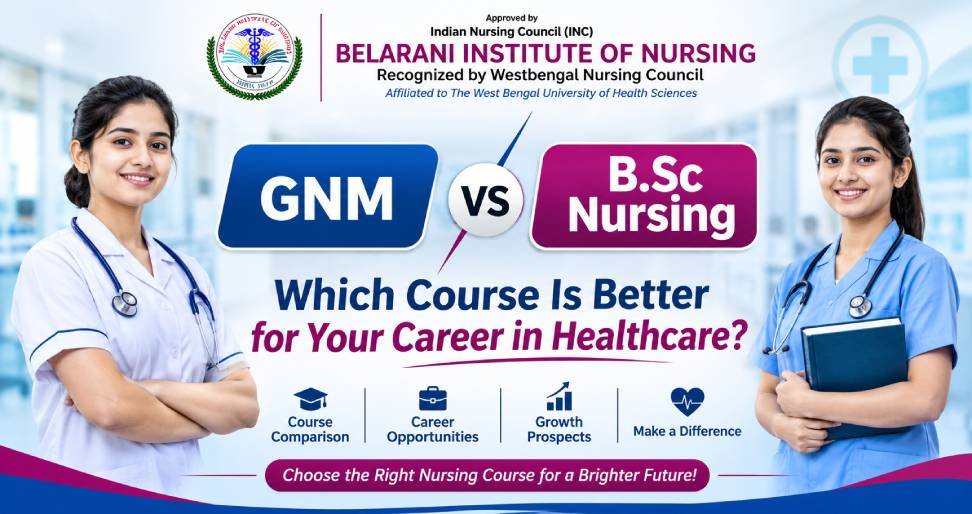
Choosing the right nursing course is an important decision for students who want to build a successful career in the healthcare industry. Nursing offers excellent opportunities to work in hospitals, healthcare centres, clinics, nursing homes, and other medical institutions. However, when exploring nursing education, two popular options often create confusion among students: GNM (General Nursing and Midwifery) and B.Sc Nursing (Bachelor of Science in Nursing).
Both courses prepare students to become skilled nursing professionals, but they differ in terms of course duration, eligibility, curriculum, career opportunities, and future growth. Understanding these differences can help students select the right course according to their educational background and career goals.
In this blog, we will compare GNM and B.Sc Nursing to help you understand which course is better for your future in healthcare.
1. What Is GNM Nursing?
GNM stands for General Nursing and Midwifery. It is a diploma-level nursing programme designed to develop practical nursing skills and prepare students to provide quality patient care.
The course focuses on fundamental nursing practices, patient management, maternity care, community health, and medical assistance. Students receive theoretical education along with practical clinical training to understand how healthcare facilities operate.
GNM is a suitable option for students who want to enter the nursing profession through a diploma programme.
Key Highlights of GNM Nursing:
- Course Duration: Generally 3 years, including the applicable internship requirements.
- Qualification: Diploma in General Nursing and Midwifery.
- Eligibility: Generally requires 10+2 qualification, subject to applicable admission rules.
- Focus: Practical nursing, patient care, and midwifery.
- Career Scope: Hospitals, nursing homes, clinics, and community healthcare facilities.
2. What Is B.Sc Nursing?
B.Sc Nursing, or Bachelor of Science in Nursing, is an undergraduate degree programme that provides comprehensive education in nursing science, healthcare management, medical practices, and patient care.
The programme combines classroom learning, laboratory sessions, clinical training, and practical experience. Students develop the knowledge and professional skills required to handle different healthcare situations.
Compared with GNM, B.Sc Nursing offers a broader academic foundation and can provide additional opportunities for higher education and professional development.
Key Highlights of B.Sc Nursing:
- Course Duration: 4 years.
- Qualification: Undergraduate degree.
- Eligibility: Generally requires 10+2 with Physics, Chemistry, and Biology, along with English, subject to applicable admission requirements.
- Focus: Advanced nursing knowledge, clinical practice, research, and healthcare management.
- Career Scope: Hospitals, speciality healthcare centres, educational institutions, and research organisations.
3. GNM vs B.Sc Nursing: Key Differences
Before selecting a nursing programme, students should understand how these courses differ.
| Comparison | GNM Nursing | B.Sc Nursing |
|---|---|---|
| Course Type | Diploma | Undergraduate Degree |
| Duration | Generally 3 years | 4 years |
| Education Level | Diploma | Bachelor’s Degree |
| Main Focus | Practical nursing and midwifery | Comprehensive nursing education |
| Clinical Training | Included | Included |
| Higher Education | Further study options available | Broader postgraduate options |
| Career Opportunities | Nursing and patient care roles | Nursing, specialised roles and further academic opportunities |
| Suitable For | Students interested in diploma-level nursing | Students seeking a bachelor’s degree |
Both programmes offer valuable learning experiences. However, the right choice depends on your academic qualifications, professional interests, and long-term career plans.
4. Eligibility Criteria: GNM vs B.Sc Nursing
Eligibility is one of the most important factors to consider before applying for admission.
GNM Nursing Eligibility
Students generally need to complete their 10+2 education from a recognised board. Admission requirements may include minimum qualifying marks, subject preferences, age criteria, and other conditions established by the relevant nursing authorities and institution.
B.Sc Nursing Eligibility
Students generally need to complete their 10+2 education with Physics, Chemistry, Biology, and English. They must also fulfil the minimum marks, age, and other admission requirements applicable to the programme.
Before applying, students should verify the latest eligibility guidelines issued by the Indian Nursing Council, relevant state nursing authorities, and the institution.
5. Career Opportunities After GNM Nursing
After completing GNM, graduates can explore different opportunities in the healthcare sector, depending on registration and recruitment requirements.
Some popular career options include:
- Staff Nurse: Providing patient care, monitoring health conditions, and assisting doctors.
- Community Health Nurse: Supporting healthcare programmes and promoting health awareness.
- Home Healthcare Nurse: Providing nursing support to patients at home.
- Midwifery-Related Roles: Supporting maternal healthcare and childbirth services within the scope of professional qualification.
- Nursing Assistant or Clinical Support Roles: Assisting with patient care and healthcare activities.
GNM graduates can also explore further education opportunities, including eligible post-basic nursing programmes, subject to admission requirements.
6. Career Opportunities After B.Sc Nursing
B.Sc Nursing graduates can explore a wider range of career and academic opportunities because the programme provides a comprehensive undergraduate foundation.
Some potential career options include:
- Staff Nurse: Working in hospitals, clinics, and speciality healthcare centres.
- ICU Nurse: Providing nursing care to critically ill patients after obtaining the required training and experience.
- Emergency Nurse: Supporting emergency medical teams and providing urgent patient care.
- Nursing Educator: Pursuing teaching opportunities after obtaining the required higher qualifications and experience.
- Nursing Administrator: Exploring healthcare administration and management roles with suitable qualifications and experience.
- Public Health Nurse: Participating in community health programmes and public healthcare initiatives.
- Research Nurse: Supporting clinical research and healthcare studies with appropriate training.
B.Sc Nursing graduates can also pursue higher studies, such as M.Sc Nursing, and explore specialisations in different nursing fields.
7. Which Course Offers Better Career Growth?
When comparing GNM and B.Sc Nursing, career growth depends on several factors, including professional skills, experience, additional qualifications, and employment opportunities.
GNM Career Growth
GNM provides a pathway into the nursing profession through diploma-level education. Students develop essential clinical skills and gain experience in patient care. They can also explore further nursing education through eligible programmes.
B.Sc Nursing Career Growth
B.Sc Nursing provides a bachelor’s degree and a broader academic foundation. Graduates can pursue postgraduate education, nursing specialisations, teaching-related opportunities, and healthcare management roles after meeting the relevant requirements.
Therefore, B.Sc Nursing may be a better option for students who want to pursue long-term academic development and a wider range of career opportunities.
However, GNM remains a valuable option for students interested in diploma-level nursing education and practical patient care.
8. GNM vs B.Sc Nursing: Which Course Should You Choose?
The best nursing course depends on your educational background and future ambitions.
Choose GNM Nursing if:
- You are interested in pursuing diploma-level nursing education.
- You want to develop practical patient-care skills.
- You meet the eligibility requirements for the GNM programme.
- You want to explore nursing career opportunities through a diploma qualification.
Choose B.Sc Nursing if:
- You have completed 10+2 with the required science subjects.
- You want to pursue an undergraduate nursing degree.
- You are interested in postgraduate nursing education.
- You want to explore broader opportunities in clinical nursing, specialisation, research, and healthcare education.
Our Recommendation: If you meet the eligibility requirements and your goal is to build a long-term career with opportunities for higher education, B.Sc Nursing is generally the stronger academic choice. However, GNM can also be a suitable starting point for students interested in diploma-level nursing education.
9. Why Choose Belarani Institute of Nursing?
Selecting the right nursing institution is just as important as selecting the right course. Students should look for an institution that focuses on quality education, practical training, professional development, and clinical learning opportunities.
Belarani Institute of Nursing aims to support aspiring nursing professionals by providing an educational environment focused on developing healthcare knowledge and nursing skills.
By choosing the right nursing programme, students can begin their journey towards becoming responsible and skilled healthcare professionals.
At Belarani Institute of Nursing, aspiring students can explore nursing education opportunities and work towards developing the knowledge, confidence, and practical abilities required in the healthcare sector.
Before taking admission, students should check the institute’s course availability, applicable approvals, affiliation, eligibility criteria, and clinical training facilities.
10. Final Thoughts
Both GNM and B.Sc Nursing offer meaningful career opportunities in the healthcare industry. While GNM provides diploma-level nursing education with an emphasis on practical patient care, B.Sc Nursing offers a comprehensive undergraduate degree with broader opportunities for further education and professional growth.
If you want to pursue a nursing career with long-term academic and professional development opportunities, B.Sc Nursing can be an excellent choice. On the other hand, GNM is also a valuable pathway for students who wish to enter the nursing profession through diploma education.
The most important step is to choose a recognised nursing programme that matches your qualifications and career ambitions.
Start your journey towards a rewarding healthcare career with Belarani Institute of Nursing. Explore your nursing education opportunities and take the first step towards building your future in healthcare!