The healthcare industry is one of the most important and rapidly evolving sectors, offering rewarding career opportunities for individuals who want to make a positive difference in people’s lives. Nursing is a vital part of this industry, as nurses play an essential role in patient care, treatment support, health education, and hospital management. However, becoming a successful nurse requires more than completing a nursing course. Students must develop a combination of medical knowledge, practical abilities, communication skills, and professional qualities.
Whether you are planning to pursue ANM, GNM, or B.Sc. Nursing, developing the right skills during your education can help you build a strong foundation for your healthcare career.
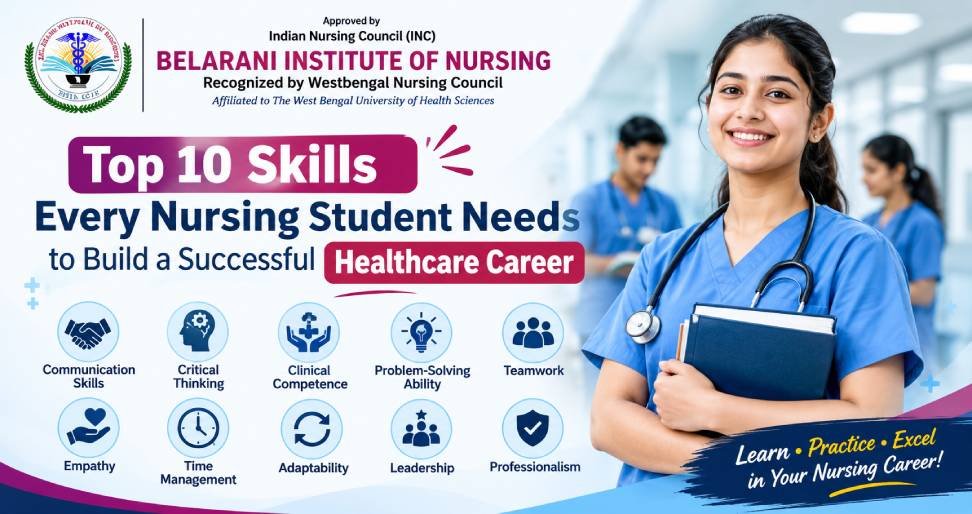
In this blog, we will explore the top 10 essential skills every nursing student needs to develop to become a confident, responsible, and skilled healthcare professional.
1. Effective Communication Skills
Communication is one of the most important skills for every nursing professional. Nurses regularly interact with patients, doctors, healthcare assistants, and family members. Clear communication helps them understand patient concerns, explain healthcare instructions, and share important medical information.
Nursing students should learn how to:
- Communicate clearly and respectfully with patients.
- Listen carefully to patient concerns and questions.
- Explain medical instructions in simple language.
- Share accurate patient information with doctors and colleagues.
- Maintain professional communication in healthcare settings.
Strong communication skills help create trust between patients and healthcare professionals while reducing the chances of misunderstandings.
2. Patient Care and Clinical Skills
Practical patient care is at the heart of nursing. Nursing students must develop the clinical abilities required to support patients during treatment, recovery, and routine healthcare activities.
Some essential clinical skills include:
- Monitoring blood pressure, temperature, pulse, and respiration.
- Assisting patients with daily activities.
- Maintaining personal hygiene and patient comfort.
- Understanding basic wound care procedures.
- Following infection prevention and safety practices.
- Supporting patients during medical examinations.
Practical training is particularly important because it allows students to apply their classroom knowledge in real healthcare environments under appropriate supervision.
3. Critical Thinking and Decision-Making
Healthcare professionals often work in situations where patients require immediate attention. Nurses must be able to observe symptoms, understand changes in patient conditions, and communicate concerns to the appropriate medical professionals.
Critical thinking helps nursing students evaluate situations instead of depending only on memorised information.
To develop this skill, students should:
- Understand basic medical conditions and their symptoms.
- Observe changes in patients’ physical conditions.
- Identify situations that require immediate attention.
- Follow established clinical protocols.
- Communicate important observations to senior healthcare professionals.
Good decision-making helps nurses provide safe and appropriate care within their professional responsibilities.
4. Empathy and Emotional Intelligence
Nursing is not only about medicines and medical procedures. It is also about understanding the emotional and physical challenges patients experience.
Patients may feel anxious, uncomfortable, frightened, or stressed during treatment. Nurses who demonstrate empathy can help patients feel more comfortable and supported.
Nursing students should practise:
- Understanding different patient emotions.
- Treating every patient with dignity and respect.
- Remaining calm during stressful situations.
- Supporting patients and their families emotionally.
- Avoiding judgement based on a patient’s background or condition.
Empathy helps nursing professionals develop meaningful relationships with patients and contributes to a more supportive healthcare environment.
5. Time Management and Organisational Skills
Nurses often handle multiple responsibilities during a single shift. These may include monitoring patients, maintaining medical records, assisting doctors, administering prescribed medication, and coordinating patient care.
Without proper time management, it can become difficult to complete responsibilities efficiently.
Students can improve their organisational skills by:
- Preparing daily study and clinical practice schedules.
- Prioritising important responsibilities.
- Maintaining accurate patient documentation.
- Following hospital routines and instructions.
- Completing assigned tasks within appropriate timeframes.
Good time management improves efficiency and helps nursing professionals maintain consistency in patient care.
6. Teamwork and Collaboration
Healthcare services depend on cooperation between different professionals. Nurses work alongside doctors, surgeons, laboratory technicians, pharmacists, physiotherapists, and other healthcare workers.
Teamwork ensures that patients receive coordinated care and that important information is communicated properly.
Nursing students should learn to:
- Respect the responsibilities of other healthcare professionals.
- Cooperate with classmates during practical training.
- Share relevant information accurately.
- Accept guidance and constructive feedback.
- Support colleagues when required.
Developing teamwork skills during nursing education prepares students for the collaborative nature of hospitals, clinics, and other healthcare facilities.
7. Knowledge of Medical Technology
Modern healthcare increasingly depends on medical equipment, digital patient records, and advanced diagnostic systems. Nurses need to understand how commonly used healthcare technologies support patient monitoring and treatment.
Depending on their training and workplace responsibilities, nursing professionals may work with:
- Digital blood pressure monitors.
- Pulse oximeters.
- ECG monitoring equipment.
- Electronic health records.
- Infusion pumps.
- Patient monitoring systems.
Nursing students should remain open to learning new technologies and understand the importance of following equipment instructions and safety protocols.
Basic computer knowledge and digital literacy can also help students adapt to modern healthcare workplaces.
8. Adaptability and Problem-Solving Skills
Every patient is different, and healthcare environments can change quickly. Nurses may encounter unexpected situations, changing patient requirements, or demanding work schedules.
Adaptability helps nursing professionals respond positively to changing circumstances while maintaining professional standards.
Students can develop adaptability by:
- Participating actively in practical training.
- Learning from different clinical experiences.
- Accepting new responsibilities within their training scope.
- Remaining calm when situations become challenging.
- Finding appropriate solutions with guidance from senior professionals.
Being flexible and willing to learn helps nursing students become more confident and prepared for professional responsibilities.
9. Attention to Detail and Observation Skills
Small details can make a significant difference in healthcare. Nurses must carefully observe patients, follow medical instructions, maintain accurate records, and identify changes that may require medical attention.
Attention to detail is particularly important when handling medication, recording vital signs, and following infection control procedures.
Nursing students should focus on:
- Checking patient information carefully.
- Following prescribed medication instructions.
- Recording vital signs accurately.
- Observing changes in patient behaviour and condition.
- Maintaining cleanliness and hygiene standards.
- Reporting unusual symptoms promptly.
Developing strong observation skills helps nurses contribute to patient safety and quality healthcare services.
10. Continuous Learning and Professional Development
The healthcare industry continues to evolve with new medical research, treatment methods, technologies, and patient care practices. Therefore, nursing education should not stop after completing a diploma or degree.
Successful nursing professionals understand the importance of continuously improving their knowledge and practical abilities.
Students can focus on professional development by:
- Attending healthcare seminars and workshops.
- Learning about new nursing practices.
- Participating in additional skill-development programmes.
- Reading medical and nursing-related educational materials.
- Seeking guidance from experienced professionals.
- Pursuing further education and specialised training.
A commitment to lifelong learning helps nursing professionals adapt to industry developments and explore different career opportunities.
Career Opportunities After Developing Essential Nursing Skills
Developing these skills can prepare nursing students for different career opportunities in the healthcare sector. Depending on their qualifications, registration, experience, and applicable requirements, nursing graduates may explore roles such as:
- Staff Nurse: Providing direct patient care in hospitals and healthcare facilities.
- ICU Nurse: Supporting the care of critically ill patients with specialised training.
- Emergency Nurse: Assisting in emergency care and urgent medical situations.
- Community Health Nurse: Supporting healthcare awareness and community-based services.
- Paediatric Nurse: Working with infants, children, and their healthcare needs.
- Geriatric Nurse: Supporting elderly patients and their healthcare requirements.
- Operation Theatre Nurse: Assisting surgical teams in operation theatre settings.
- Nursing Educator: Teaching and guiding future nursing students with the required qualifications.
- Home Healthcare Nurse: Providing nursing care in home-based healthcare settings.
- Nursing Administrator: Exploring healthcare management and coordination roles with relevant experience and qualifications.
These career paths demonstrate how nursing education can open doors to different areas of the healthcare industry.
Start Your Nursing Career with Belarani Institute of Nursing
Building a successful nursing career begins with choosing the right educational institution. Students need an environment where they can develop theoretical knowledge, practical nursing abilities, professional discipline, and confidence.
Belarani Institute of Nursing aims to support aspiring nursing professionals in building a strong foundation for their healthcare careers. Through nursing education and skill development, students can prepare themselves for the responsibilities and opportunities available in the healthcare sector.
Choosing the right nursing programme and focusing on practical learning can help students move towards their professional goals.
If you dream of becoming a nursing professional and contributing to society through healthcare services, Belarani Institute of Nursing can be a place to explore your educational journey.
Conclusion
A successful nursing career requires much more than academic qualifications. Communication, empathy, clinical knowledge, critical thinking, teamwork, time management, and continuous learning are essential skills that every nursing student should develop.
By focusing on these ten skills during their education, students can become better prepared to handle professional responsibilities and contribute positively to patient care.
Remember, becoming a good nurse is a continuous journey of learning, practice, dedication, and compassion. Start building these essential skills today and take your first step towards a rewarding healthcare career with Belarani Institute of Nursing.