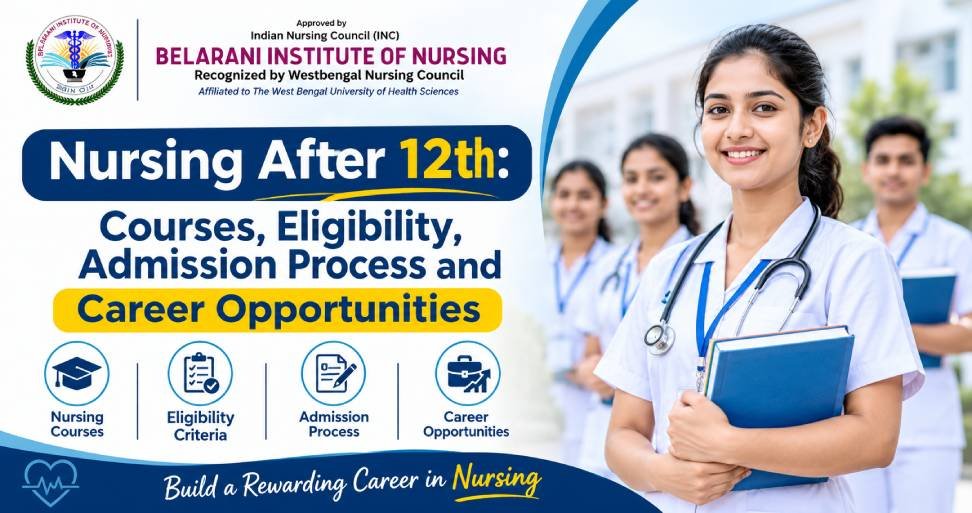
Choosing the right career after completing Class 12 is an important decision for every student. For those who want to build a meaningful career in healthcare, nursing is one of the most rewarding professional options. Nurses play a vital role in patient care, supporting doctors, assisting in medical procedures, and helping patients recover from illnesses.
With the increasing demand for qualified healthcare professionals, nursing offers promising career opportunities in India and abroad. Students who have completed their 12th standard can choose from several nursing courses based on their educational background, interests, and career goals.
If you are planning to pursue nursing after 12th, understanding the available courses, eligibility requirements, admission process, and career opportunities can help you make an informed decision.
Why Choose Nursing After 12th?
Nursing is a profession that combines medical knowledge, practical skills, and compassion. It provides students with the opportunity to contribute directly to people’s health and well-being.
Some important reasons to choose nursing after 12th include:
- Growing Career Opportunities: Hospitals, nursing homes, clinics, and healthcare centres require trained nursing professionals.
- Professional Development: Nurses can pursue higher education and specialisations to improve their career prospects.
- Job Stability: Healthcare services remain essential, creating a continuing need for skilled professionals.
- Meaningful Work: Nursing allows individuals to make a positive difference in patients’ lives.
- Global Opportunities: Qualified nurses may explore employment opportunities in countries such as the UK, Canada, Australia, and the Middle East, subject to licensing and registration requirements.
Nursing Courses After 12th
Students can choose different nursing programmes depending on their academic qualifications and career objectives. The most common nursing courses after Class 12 are:
1. Bachelor of Science in Nursing (B.Sc Nursing)
B.Sc Nursing is a four-year undergraduate degree programme designed for students interested in developing professional nursing knowledge and skills.
The course covers subjects such as anatomy, physiology, microbiology, nutrition, medical-surgical nursing, community health nursing, and child health nursing.
Students also receive clinical training to gain practical experience in patient care.
Course Duration: 4 years
Eligibility: Generally, students must complete 10+2 with Physics, Chemistry, and Biology, along with English, and meet the minimum marks and other eligibility criteria prescribed by the relevant authorities.
B.Sc Nursing is suitable for students who want to pursue advanced nursing roles, higher education, teaching, or specialised healthcare careers.
2. General Nursing and Midwifery (GNM)
General Nursing and Midwifery is a diploma-level nursing programme that prepares students to provide nursing care in different healthcare settings.
The programme focuses on patient care, basic nursing procedures, community health, midwifery, and clinical practice.
Course Duration: Generally 3 years, with the applicable internship or training requirements as prescribed.
Eligibility: Students usually need to complete 10+2 with English and meet the eligibility criteria specified by the relevant nursing authorities and institution. Accepted streams and minimum marks may vary.
GNM can be a suitable option for students who want to enter the nursing profession through a diploma programme.
3. Auxiliary Nurse Midwife (ANM)
Auxiliary Nurse Midwifery is a nursing programme focused on community healthcare, maternal health, child health, and basic medical services.
ANM professionals play an important role in providing healthcare support in rural and community settings.
Course Duration: Generally 2 years
Eligibility: Students must meet the educational and age requirements prescribed by the relevant nursing authorities. The accepted qualifications may vary according to admission rules.
ANM is a suitable option for students interested in community healthcare and maternal and child health services.
Eligibility Criteria for Nursing After 12th
The eligibility requirements for nursing courses depend on the programme and the institution offering it.
Here are the general requirements:
| Course | Educational Qualification | Duration |
|---|---|---|
| B.Sc Nursing | 10+2 with PCB and English | 4 years |
| GNM | 10+2 with English and applicable subject criteria | Generally 3 years |
| ANM | 10+2 as per applicable admission rules | Generally 2 years |
For B.Sc Nursing, students generally need to meet the prescribed minimum marks in Physics, Chemistry, and Biology. Many institutions require at least 45% aggregate marks in these subjects, though eligibility may differ based on applicable regulations and category.
Students should also check age requirements, entrance examination rules, medical fitness requirements, and registration conditions before applying.
Important: Always verify the latest eligibility criteria from the relevant nursing council, admission authority, and institution before submitting an application.
Nursing Admission Process After 12th
The admission process for nursing courses may differ between government and private institutions. However, students generally need to follow these steps.
Step 1: Choose the Right Nursing Course
Select a course according to your educational background and career goals. Students interested in a professional undergraduate degree can consider B.Sc Nursing, while those exploring diploma programmes may consider GNM or ANM.
Step 2: Check Eligibility Requirements
Review the minimum educational qualifications, age criteria, subject requirements, and other admission conditions.
Step 3: Complete the Application Form
Visit the official website of the selected nursing institution or admission authority. Fill in the application form carefully and provide accurate academic and personal information.
Step 4: Appear for the Entrance Examination
Some nursing institutions and admission authorities conduct entrance examinations. Depending on the institution, admission may also be based on qualifying examination marks or another approved selection process.
Step 5: Attend Counselling or Document Verification
Selected candidates may need to participate in counselling, document verification, or an interview, depending on the admission procedure.
Step 6: Confirm Admission
After selection, students must complete the admission formalities, submit the required documents, and pay the applicable fees within the specified deadline.
Career Opportunities After Nursing
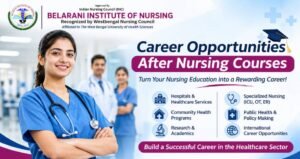
Nursing offers a wide range of career opportunities across hospitals, healthcare centres, educational institutions, and community health programmes.
After completing the required nursing qualification and registration, students may explore the following career options:
1. Staff Nurse
Staff nurses provide direct patient care, monitor health conditions, administer prescribed treatments, and assist doctors in hospitals and healthcare centres.
2. Community Health Nurse
Community health nurses work with local communities to promote health awareness, support preventive healthcare, and assist in community-based health programmes.
3. Critical Care Nurse
Critical care nurses work in intensive care units and other specialised departments. They care for patients who require close monitoring and advanced nursing support.
Additional training or experience may be required for specialised roles.
4. Paediatric Nurse
Paediatric nurses provide nursing care to infants, children, and adolescents. They work in children’s hospitals, paediatric departments, and other healthcare facilities.
5. Nursing Educator
Nurses with the required higher qualifications and experience can explore teaching opportunities in nursing colleges and educational institutions.
6. Nursing Opportunities Abroad
Qualified nurses may pursue international career opportunities after meeting the destination country’s registration, examination, language, and licensing requirements.
Career growth depends on qualifications, clinical experience, professional skills, and the applicable recruitment and registration rules.
Build Your Nursing Career with Belarani Institute of Nursing
Starting a nursing career requires the right education, practical training, and professional guidance. Choosing an appropriate nursing institution can help students develop the knowledge and skills needed to work in the healthcare sector.
Belarani Institute of Nursing provides an opportunity for aspiring nursing students to explore nursing education and work towards their professional goals.
Students interested in pursuing nursing after 12th can connect with Belarani Institute of Nursing to learn more about available courses, eligibility requirements, admission procedures, and career-oriented nursing education.
Before taking admission, students should verify the course approval, affiliation, clinical training facilities, and registration eligibility applicable to their selected programme.
Conclusion
Nursing after 12th is an excellent career option for students who are passionate about healthcare and patient well-being. With courses such as B.Sc Nursing, GNM, and ANM, students can choose a programme that matches their academic qualifications and future ambitions.
From working as a staff nurse to pursuing specialised nursing roles, teaching, or international opportunities, the profession offers several pathways for career development.
If you are planning to begin your nursing journey, explore the available courses, understand the admission requirements, and choose an institution that supports your professional growth.
Take the first step towards a rewarding healthcare career with Belarani Institute of Nursing. Explore your nursing education options and begin building a brighter future in the healthcare industry.